Sanctions as Market Control
How Washington Is Managing Iranian Oil Supply

The recent easing of sanctions on Iranian oil is less a concession than a strategic shift—one that allows the United States to stabilize global markets while tightly constraining Tehran’s access to revenue.
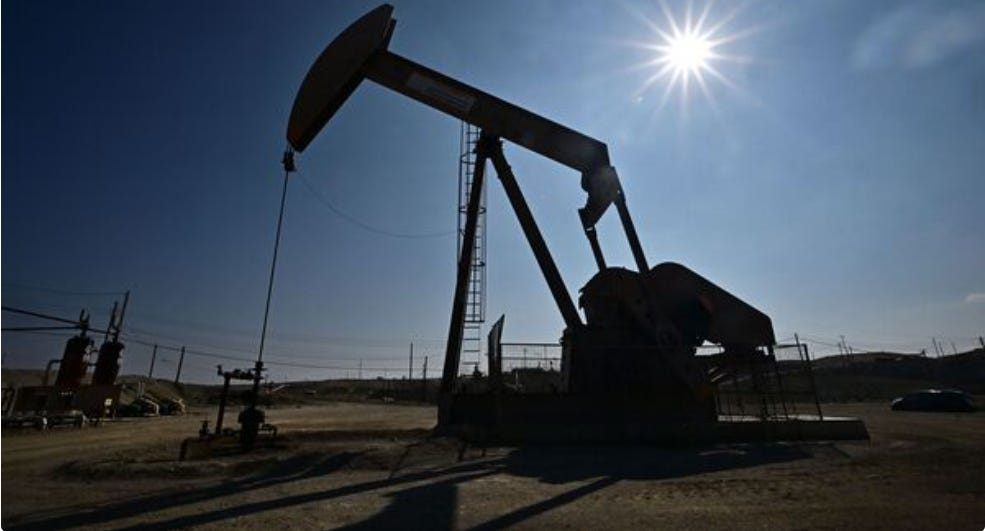
The United States’ recent decision to ease sanctions on Iranian oil already in transit marks a subtle but important shift in sanctions policy. Rather than restricting flows outright, Washington is increasingly using sanctions to regulate global oil supply—stabilizing markets while maintaining leverage over adversaries.
This approach mirrors earlier actions involving Russian oil shipments and reflects a broader strategy: allowing limited volumes of sanctioned oil to reach global markets under controlled conditions. The result is a form of indirect market management, in which the United States influences not only whether oil is sold but also the strategic benefit the exporting country ultimately derives.
Despite ongoing geopolitical tensions involving Iran, Israel, and the United States, oil prices have remained relatively stable in recent weeks. According to data from the U.S. Energy Information Administration, crude oil futures have hovered near $98 per barrel, suggesting that calibrated sanctions relief can increase supply without fundamentally altering the balance of power.
Deploying Economic Statecraft
The easing of sanctions on Iranian oil signals a broader transformation in how economic statecraft is being deployed. Rather than functioning solely as a tool of economic denial, sanctions are increasingly being used to shape market outcomes.
In the case of Iranian oil, the United States is not simply restricting exports—it is influencing the timing, volume, and financial utility of those exports. By allowing oil already in transit to reach global markets, Washington increases supply at critical moments, helping to stabilize prices without granting Tehran meaningful economic relief.
This approach reflects a shift toward precision. Traditional sanctions aimed to isolate economies; the emerging model seeks to integrate them selectively under controlled conditions. Iran’s oil continues to flow, but the associated revenues remain constrained by financial restrictions, payment mechanisms, and geopolitical dependencies.
An Isolated Economy
Iran’s ability to benefit from increased oil flows remains limited by structural constraints. Its banking sector is largely cut off from the international financial system, and the U.S. Department of the Treasury has designated the Central Bank of Iran as a key entity in illicit financial activity.
At the same time, Tehran relies on complex networks of intermediaries, front companies, and discounted sales to move its oil. Many participants in these networks are motivated more by profit than political loyalty, further diluting the regime’s control over revenues.
China plays a central role in this system. As Iran’s primary oil customer, it has leveraged sanctions to secure discounted crude while often settling payments in yuan or through barter arrangements. Significant portions of Iranian oil revenues remain restricted in foreign accounts, limiting Tehran’s financial flexibility.
A New Geopolitics
From a strategic perspective, the current approach enhances U.S. leverage across multiple fronts. By controlling the conditions under which Iranian oil reaches global markets, Washington can influence both supply dynamics and Iran’s economic outcomes.
China’s position as both a buyer and financial intermediary adds another layer of complexity. While benefiting from discounted oil, Beijing also acts as a gatekeeper, shaping how and when Iran can access its own revenues.
The military dimension is equally important. Maritime routes, particularly through the Strait of Hormuz, remain vulnerable to disruption. At the same time, U.S. naval capabilities enable Washington to monitor and potentially interdict oil flows, reinforcing its broader strategy of controlled access.
What Comes Next
If current policy continues, sanctions on Iranian oil are likely to evolve toward a calibrated-control model rather than a blanket restriction. Under such a framework, the United States can selectively allow additional volumes of oil into global markets during periods of price pressure, while maintaining financial constraints that limit Iran’s access to revenue.
For Iran, this implies continued constrained exports. Oil will continue to flow, particularly to key buyers such as China, but the ability to convert these sales into usable financial resources will remain limited.
From a market perspective, the controlled release of sanctioned oil is likely to contribute to continued price stability, particularly if coordinated with broader supply management efforts. However, miscalibration could reintroduce volatility into already sensitive energy markets.
More broadly, this model of sanctions as market regulation may extend beyond Iran, offering a template for managing adversarial economies without fully excluding them from global systems.
Conclusion
The easing of sanctions on Iranian oil suggests that Washington is moving beyond the traditional logic of economic pressure. Instead of simply restricting adversaries, it is shaping the conditions under which they participate in global markets. In this emerging framework, sanctions are no longer just instruments of denial—they are tools of control
.